What is heart disease? Consultant cardiologist explains.
Heart disease is not one single illness. It is an umbrella term for conditions that affect the heart’s blood supply, muscle, valves, rhythm or structure. Some develop slowly and remain silent for years. Others appear suddenly, as a heart attack or a dangerous heart rhythm. That sounds alarming, but there is an important positive message: much of cardiovascular risk can be identified and reduced. The large international INTERHEART study found that nine potentially modifiable factors accounted for most of the population risk of a first heart attack across 52 countries [1]. Good prevention is therefore not about finding one miracle food or test. It is about understanding your personal risk and steadily improving the factors that matter.
Heart disease and cardiovascular disease: are they the same?
The terms overlap, but they are not identical. Heart disease usually refers to conditions affecting the heart itself. Cardiovascular disease (CVD) is broader: it includes diseases of the heart and blood vessels, such as coronary heart disease, stroke and peripheral arterial disease.
The distinction matters because the same process can affect several parts of the circulation. Atherosclerosis—the gradual build-up of fatty, inflammatory plaque inside arteries—may narrow the coronary arteries supplying the heart, the carotid arteries supplying the brain or arteries in the legs. This is why a heart-health review usually considers your whole vascular risk, not one organ in isolation.
Globally, cardiovascular diseases remain the leading cause of death, with heart attack and stroke responsible for most CVD deaths [2]. In the UK, coronary heart disease is a major cause of death, yet earlier recognition and better prevention and treatment have transformed outcomes [3].
What are the main types of heart disease?
Coronary heart disease
Coronary heart disease (also called coronary artery disease or ischaemic heart disease) occurs when the arteries supplying the heart muscle become narrowed by atherosclerosis. During exertion, the heart may need more oxygen than narrowed arteries can deliver, producing angina—often pressure, heaviness or tightness in the chest. If a plaque ruptures and a blood clot suddenly blocks an artery, part of the heart muscle may be injured: this is a heart attack (myocardial infarction).
Angina and a heart attack are related, but they are not the same. Stable angina is usually predictable and settles with rest or prescribed medication. New, prolonged or worsening chest discomfort can represent an acute coronary syndrome and needs urgent assessment.
Heart failure
Heart failure does not mean that the heart has stopped. It means the heart cannot pump blood—or relax and fill—well enough to meet the body’s needs. It may follow a heart attack, long-standing high blood pressure, valve disease, a heart-muscle condition or a rhythm problem.
Typical features include breathlessness, reduced exercise capacity, ankle swelling and difficulty lying flat. There are several forms, including heart failure with reduced ejection fraction and heart failure with preserved ejection fraction. Treatment depends on the cause and type, so an echocardiogram and clinical assessment are important.
Heart rhythm disorders
The heart has its own electrical system. An abnormal rhythm, or arrhythmia, may make the heart beat too fast, too slowly or irregularly. Atrial fibrillation (AF) is common and can cause palpitations, breathlessness, fatigue or no symptoms at all. Because AF can allow a clot to form in the heart and travel to the brain, clinicians assess stroke risk and may recommend an anticoagulant.
Not every palpitation is dangerous. Extra beats are common, and anxiety, caffeine, alcohol, poor sleep or illness can make them more noticeable. An ECG or longer heart monitor (Holter) helps determine what the rhythm actually is.
Heart valve disease
Four valves keep blood moving in the correct direction. A valve may become narrowed (stenosis) or leaky (regurgitation). Mild valve disease may simply need monitoring; more severe disease can cause breathlessness, chest discomfort, dizziness, fainting or heart failure. Echocardiography is the key initial imaging test.
Cardiomyopathy and inherited heart conditions
Cardiomyopathy is disease of the heart muscle. The muscle may become enlarged, thickened or stiff. Causes include genetic variants, inflammation, pregnancy, alcohol, certain medicines and other medical conditions, although sometimes no cause is found.
Inherited conditions can also affect the heart’s electrical system or the aorta. A family history of cardiomyopathy, unexplained sudden death, an aortic condition or serious rhythm problems at a young age should be discussed with a clinician. Relatives may benefit from targeted screening, but the right tests depend on the family diagnosis.
Congenital and inflammatory heart disease
Congenital heart disease is present from birth and ranges from small defects to complex structural abnormalities. Inflammatory conditions include myocarditis (heart-muscle inflammation) and pericarditis (inflammation of the sac around the heart). Their symptoms can overlap with more common problems, which is why context, examination, ECG findings, blood tests and imaging matter.
What are the symptoms of heart disease?
Heart disease can cause:
- chest pressure, tightness, heaviness or discomfort;
- breathlessness during activity or at rest;
- palpitations, a racing heart or an irregular pulse;
- dizziness, near-fainting or fainting;
- unusual fatigue or a noticeable fall in exercise capacity;
- swollen ankles or rapid fluid-related weight gain;
- discomfort spreading to an arm, shoulder, back, neck or jaw.
Symptoms are not always “textbook”. Some people—particularly women, older adults and people with diabetes—may have breathlessness, nausea, sweating, fatigue or upper-body discomfort without dramatic central chest pain. Conversely, many chest symptoms are not caused by the heart. Reflux, chest-wall pain, anxiety and lung conditions are common alternatives. The pattern and the person’s risk profile are more informative than any single symptom.
When should I seek urgent help?
Call 999 for persistent chest pressure or tightness, especially with sweating, nausea, breathlessness, collapse, or pain spreading to the arm, jaw, back or shoulder. Do the same for severe breathlessness, sudden collapse or stroke symptoms. Do not drive yourself to hospital. NHS guidance treats suspected heart attack symptoms as a medical emergency [4].
New symptoms that are not severe still deserve timely medical advice. In the UK, use NHS 111, your GP or an appropriate urgent-care service when you are unsure.
What causes heart disease?
There is rarely one cause. Risk reflects an interaction between age, biology, family history, other conditions, behaviour and environment. Important modifiable risk factors include:
- smoking;
- high blood pressure;
- raised LDL (“bad”) cholesterol;
- diabetes;
- physical inactivity;
- excess body fat, particularly around the waist;
- a diet high in salt and heavily processed foods and low in fibre-rich plants;
- excess alcohol;
- poor sleep and some sleep disorders;
- chronic kidney disease and inflammatory conditions.
INTERHEART identified abnormal blood lipids, smoking, high blood pressure, diabetes, abdominal obesity, psychosocial factors, low fruit and vegetable intake and low physical activity as major factors associated with heart attack, while moderate alcohol showed a statistical association that should not be interpreted as a reason to start drinking [1]. Modern prevention focuses on the overall pattern and on treatments with clear net benefit.
Some risk cannot be changed: increasing age, biological sex, ethnicity and inherited predisposition. A strong family history does not make disease inevitable, but it may justify earlier assessment. Familial hypercholesterolaemia, for example, can produce very high LDL cholesterol from birth and requires active detection and treatment.
How is heart disease diagnosed?
A cardiology assessment begins with the story: what happens, when, for how long, what triggers it and what relieves it. Your medical and family history, medicines, blood pressure, pulse and examination shape the next step. Tests may include:
- blood tests for cholesterol, diabetes, anaemia, kidney function and, in emergencies, heart-muscle injury;
- a 12-lead ECG to record the heart’s electrical activity;
- an echocardiogram to assess heart muscle, valves and pumping function;
- a portable ECG monitor for intermittent palpitations or fainting;
- CT coronary angiography to look for narrowing or plaque in the coronary arteries;
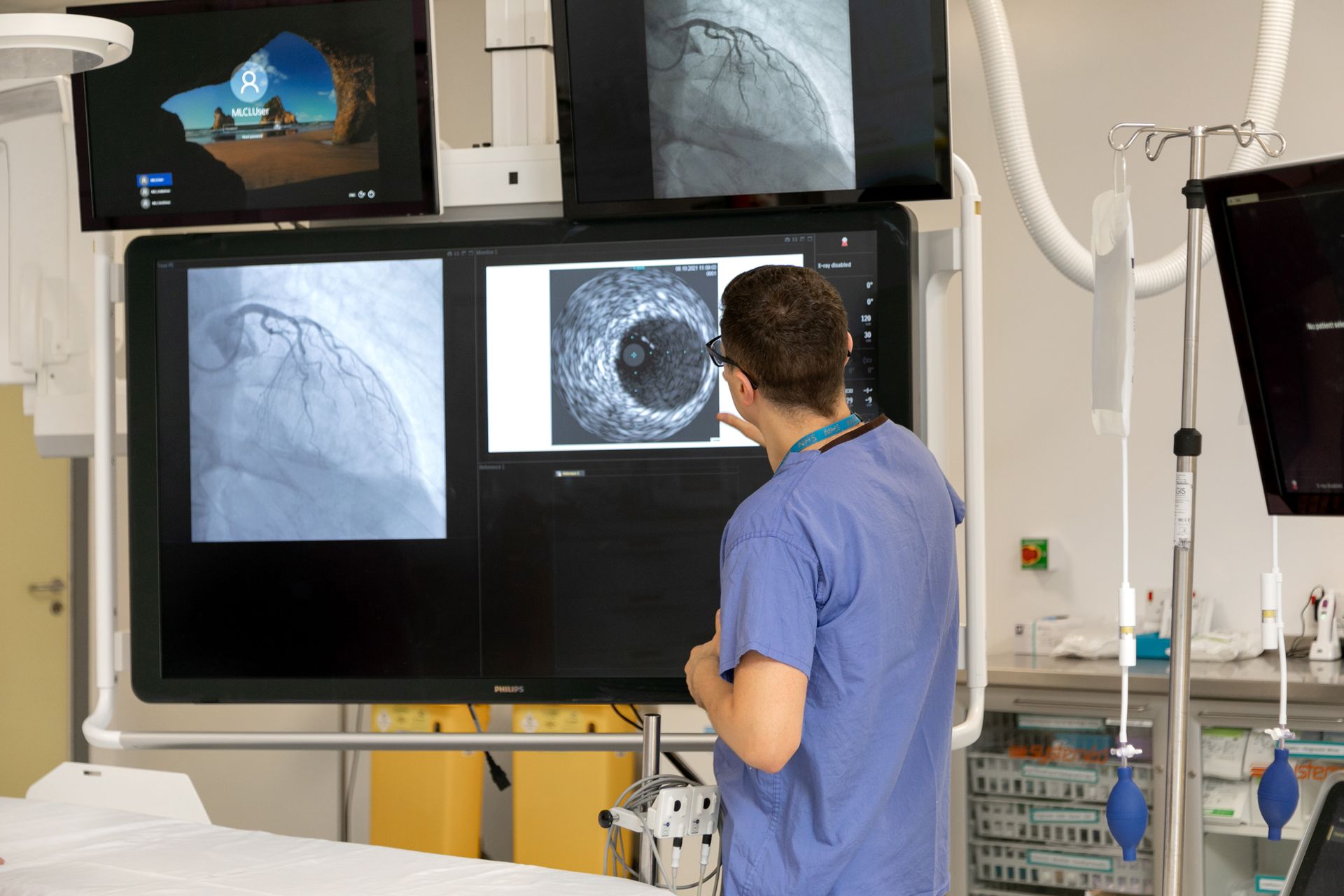
- stress imaging, cardiac MRI or invasive coronary angiography in selected cases.
More testing is not automatically better. NICE recommends choosing tests for chest pain according to the clinical picture and using CT coronary angiography as the first-line anatomical test for many people with suspected stable angina [5]. A useful test is one that answers a clear question and could change management.
Risk assessment is equally important when there are no symptoms. NICE advises using a validated tool such as QRISK3 for many adults without established CVD, while also recognising groups in whom calculators may underestimate risk [6]. A score is a starting point for a shared decision, not a verdict.
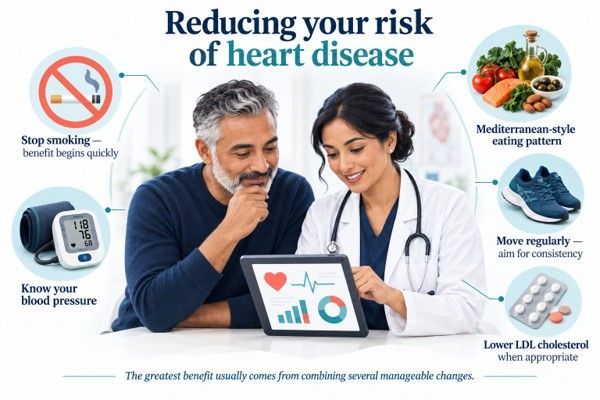
Can heart disease be prevented?
Often, risk can be reduced substantially. Prevention is most effective when it is proportionate: the higher the underlying risk, the greater the likely absolute benefit from treatment.
Do not smoke
Stopping smoking is one of the most powerful heart-protective actions. Risk falls after quitting, although it may take years to approach that of someone who never smoked. A large US cohort found a substantial reduction in cardiovascular risk within five years among heavy smokers who quit, with risk continuing to decline over time [7]. Behavioural support plus stop-smoking medication is generally more effective than willpower alone.
Know your blood pressure
High blood pressure often causes no symptoms while placing extra strain on arteries, the heart, brain and kidneys. In a large meta-analysis, each 10 mmHg reduction in systolic blood pressure was associated with significant reductions in major cardiovascular events, coronary disease, stroke and heart failure [8]. Home readings can be useful, but technique and cuff size matter.
Lower harmful cholesterol when appropriate
LDL cholesterol plays a causal role in atherosclerosis. Lifestyle is foundational, but medication may be appropriate depending on your cholesterol, overall risk and medical history. The Cholesterol Treatment Trialists’ meta-analysis found that each 1 mmol/L reduction in LDL cholesterol with statin therapy reduced major vascular events by roughly one fifth [9]. NICE now recommends discussing atorvastatin 20 mg for primary prevention when ten-year QRISK3 is 10% or more, while allowing treatment below that threshold when risk may be underestimated or the patient prefers it [6].
Move regularly and eat for long-term health
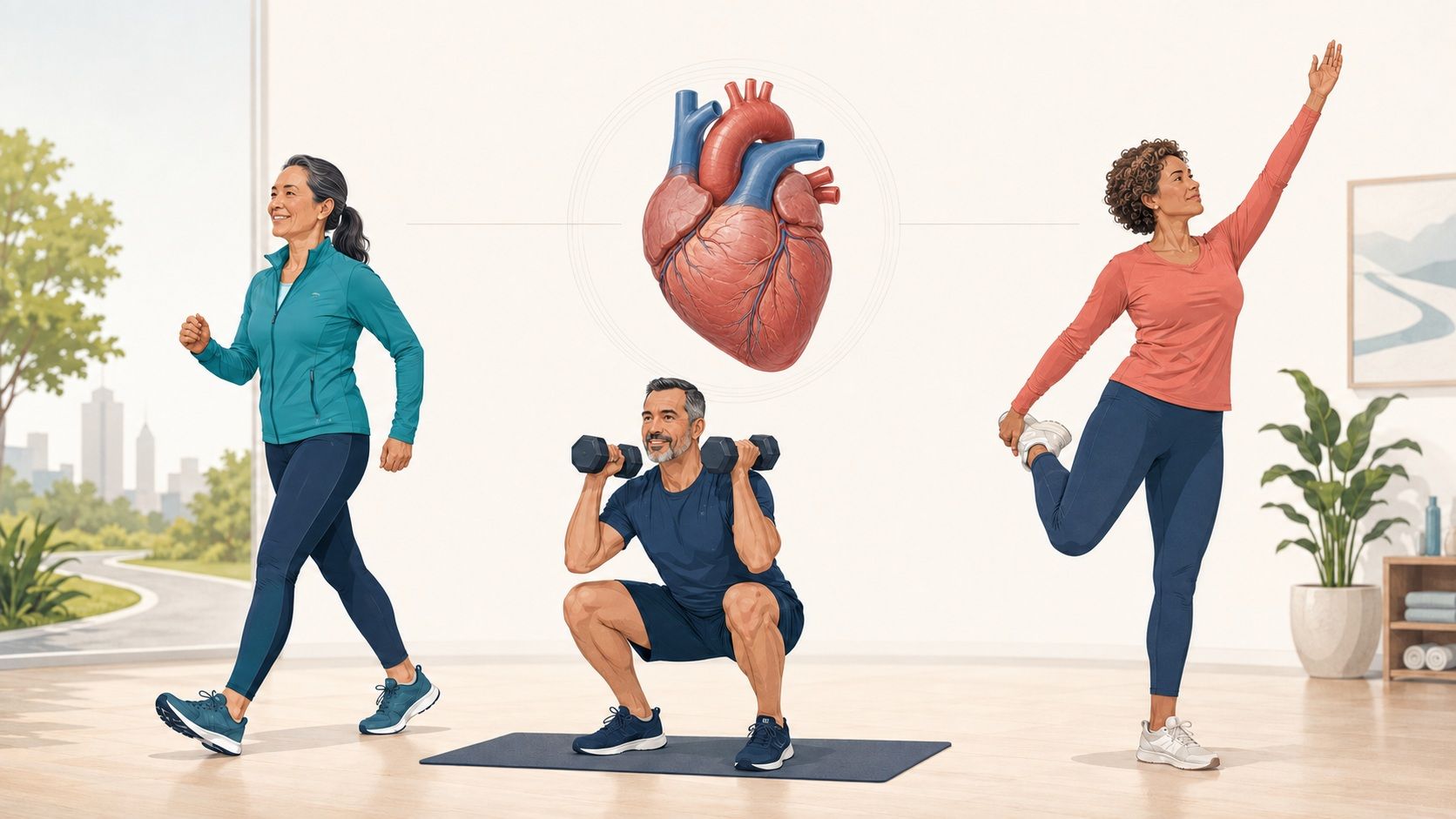
Physical activity benefits blood pressure, insulin sensitivity, fitness, sleep and wellbeing. A harmonised analysis of more than 36,000 adults found that higher total physical activity—at any intensity—was associated with lower mortality, while prolonged sedentary time was associated with higher mortality [10]. Build gradually if you have symptoms or significant medical conditions.
A Mediterranean-style eating pattern emphasises vegetables, fruit, pulses, whole grains, nuts, fish and unsaturated oils. In the PREDIMED randomised trial, a Mediterranean diet supplemented with extra-virgin olive oil or nuts reduced major cardiovascular events among people at high risk [11].
Treat the person, not just the numbers
Good prevention also means managing diabetes, kidney disease, sleep apnoea and inflammatory illness; taking prescribed medication; and attending follow-up. The 2021 European prevention guideline emphasises a stepwise, personalised approach that considers lifetime benefit, frailty, other illnesses and patient preference [12].
How is heart disease treated?
Treatment depends on the diagnosis. It may combine lifestyle support, medicines, procedures and monitoring. Examples include statins and other lipid-lowering drugs; blood-pressure treatment; antiplatelet or anticoagulant medication; drugs that improve symptoms and outcomes in heart failure; and medicines to control angina or rhythm.
Procedures include coronary angioplasty and stenting, bypass surgery, pacemakers, defibrillators, catheter ablation and valve repair or replacement. These are not interchangeable “fixes”. A stent can restore flow in a narrowed coronary artery, but it does not remove the biological tendency to form plaque elsewhere. Long-term risk-factor management remains essential.
Cardiac rehabilitation deserves special mention. It combines supervised recovery, exercise, education and psychological support after certain heart events or procedures.
A cardiologist’s practical take
The best question is not simply, “Do I have heart disease?” It is: “What is my current diagnosis, what is my future risk, and which actions will make the biggest difference?”
For one person, the priority may be urgent investigation of exertional chest pressure. For another, it may be detecting high blood pressure, treating very high cholesterol or clarifying palpitations. For someone with established disease, the focus may be symptom control, evidence-based medication and rehabilitation.
Frequently asked questions
Can you have heart disease without symptoms?
Yes. High blood pressure, atherosclerosis, valve disease and some rhythm problems may be silent. That is why risk-factor checks and appropriate screening matter, particularly with diabetes, kidney disease or a strong family history.
Is heart disease reversible?
Some effects can improve markedly. Blood pressure and cholesterol can fall, fitness can rise, heart-failure function may recover in selected cases and cardiovascular risk falls after stopping smoking. Established scar tissue or advanced structural disease may not fully reverse, but treatment can reduce symptoms, complications and future events.
What is the difference between cardiac arrest and a heart attack?
A heart attack is a blood-flow problem: a coronary artery becomes blocked and heart muscle is injured. Cardiac arrest is an electrical problem: the heart suddenly stops pumping effectively. A heart attack can trigger cardiac arrest, but they are not the same.
When should I see a cardiologist?
Seek assessment for exertional chest discomfort, unexplained breathlessness, recurrent palpitations, fainting, a heart murmur, abnormal cardiac tests or a significant family history. The appropriate first contact may be your GP, an urgent service or a cardiologist, depending on severity and timing. Emergency symptoms require 999, not a routine appointment.
References
- Yusuf S, et al. INTERHEART study. *The Lancet* (2004). https://pubmed.ncbi.nlm.nih.gov/15364185/
- World Health Organization. Cardiovascular diseases (CVDs) fact sheet.
- NHS. Cardiovascular disease. https://www.nhs.uk/conditions/cardiovascular-disease/
- NHS. Heart attack. https://www.nhs.uk/conditions/heart-attack/
- NICE CG95. Recent-onset chest pain of suspected cardiac origin: assessment and diagnosis. https://www.nice.org.uk/guidance/cg95
- NICE NG238. Cardiovascular disease: risk assessment and reduction, including lipid modification. https://www.nice.org.uk/guidance/ng238
- Duncan MS, et al. Association of smoking cessation with subsequent risk of cardiovascular disease. *JAMA* (2019). https://pubmed.ncbi.nlm.nih.gov/31429895/
- Ettehad D, et al. Blood pressure lowering for prevention of cardiovascular disease and death. *The Lancet* (2016). https://pubmed.ncbi.nlm.nih.gov/26724178/
- Cholesterol Treatment Trialists’ Collaboration. More intensive lowering of LDL cholesterol. *The Lancet* (2010). https://pubmed.ncbi.nlm.nih.gov/21067804/
- Ekelund U, et al. Physical activity, sedentary time and mortality. *BMJ* (2019). https://pubmed.ncbi.nlm.nih.gov/31434697/
- Estruch R, et al. Primary prevention of cardiovascular disease with a Mediterranean diet. *New England Journal of Medicine* (2018). https://pubmed.ncbi.nlm.nih.gov/29897866/
- Visseren FLJ, et al. 2021 ESC Guidelines on cardiovascular disease prevention. *European Heart Journal* (2021). https://pubmed.ncbi.nlm.nih.gov/34458905/
Written with assistance of AI, checked by Dr Bart Olechowski for accuracy.