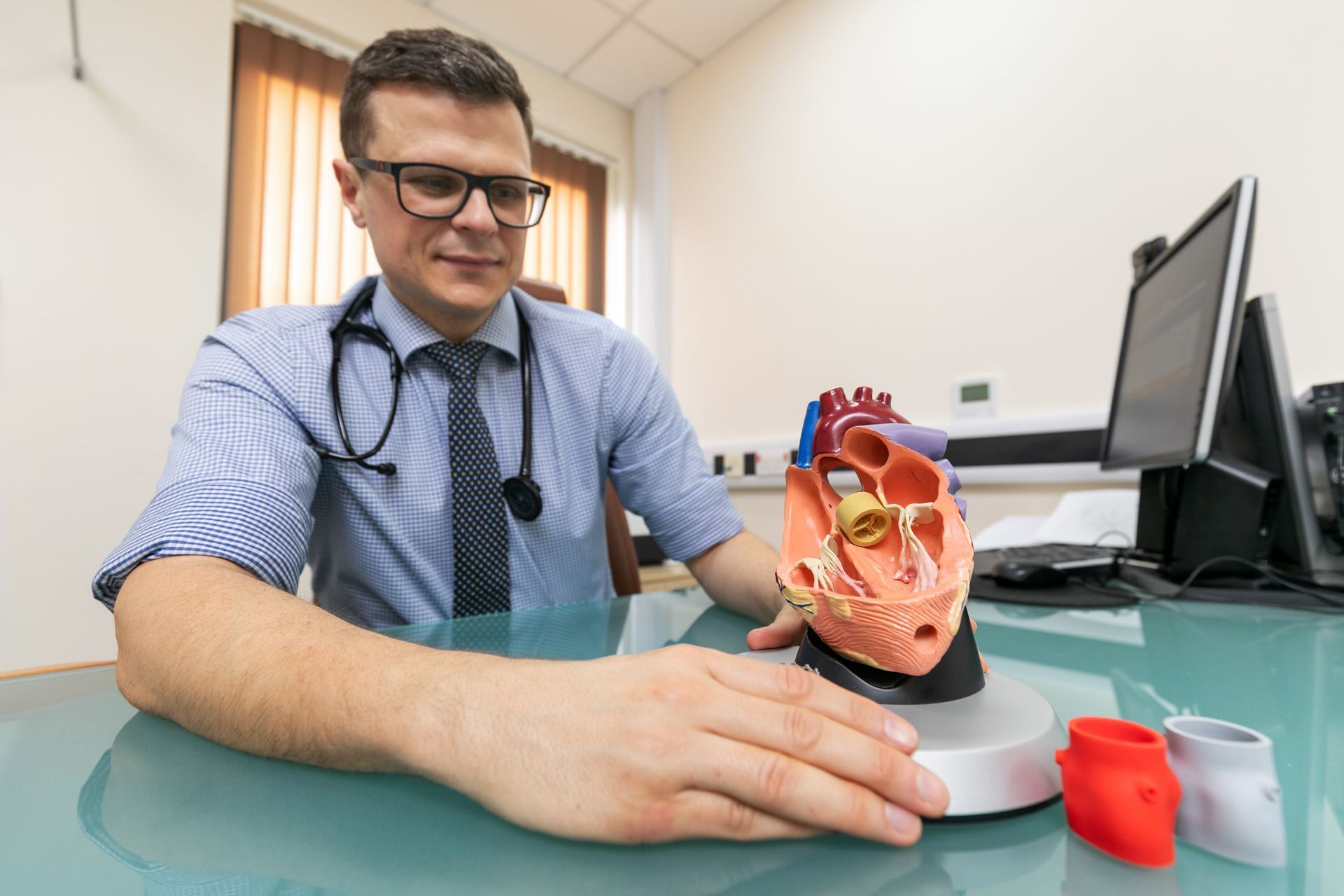
Consultant cardiologist explains how to mix cardio, strength and flexibility exercise for heart health.
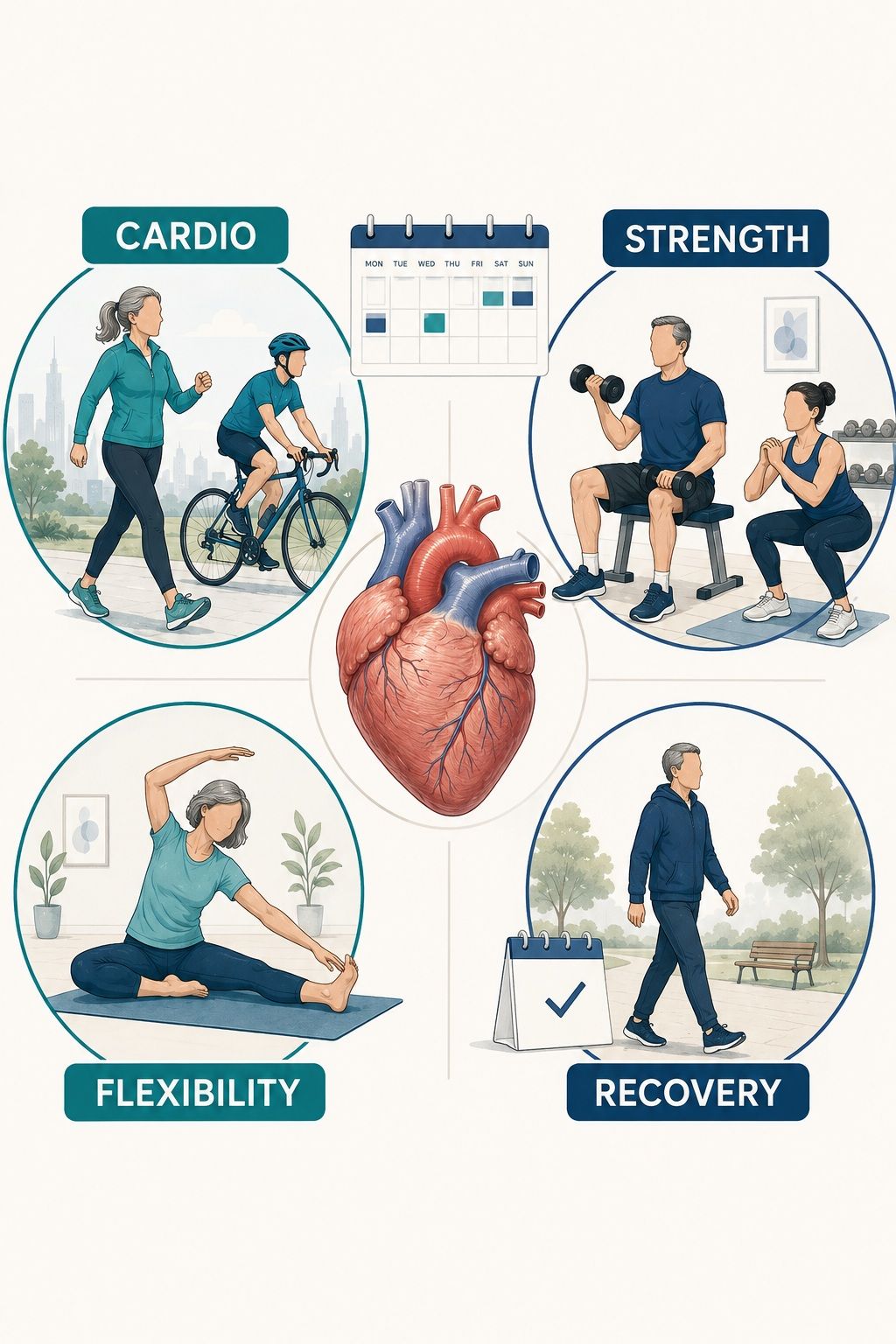
Why a mixed exercise routine is good for your heart
If you had to choose only one type of exercise for cardiovascular health, aerobic activity would have the largest and most direct evidence base. Brisk walking, cycling, swimming and similar activities train the heart and circulation to deliver oxygen more efficiently. But that does not mean cardio should stand alone. Strength training improves muscular capacity and helps manage blood pressure, glucose, body composition and day-to-day function. Flexibility and mobility work make movement easier and can help people continue with both cardio and strength training. Together, these elements form a more complete and sustainable programme.
This matters because heart health is influenced by more than the heart muscle itself. Blood vessels, skeletal muscle, blood pressure, insulin sensitivity, cholesterol, sleep, stress, balance and physical independence all affect long-term cardiovascular risk. Different forms of exercise emphasise different parts of this system. Mixing them is a practical way to cover more of the bases without needing to train like an athlete.
The evidence supports that approach. In a 2024 randomised trial, 406 adults with overweight or obesity and raised blood pressure were assigned to aerobic, resistance, combined aerobic-plus-resistance, or control groups for one year. Aerobic and combined training improved a composite cardiovascular risk profile, while resistance training alone did not produce the same overall change. Importantly, the combined group achieved this while dividing the same one-hour session between cardio and strength work, rather than adding extra exercise time [1]. This suggests that replacing some cardio with strength training can preserve broad cardiovascular benefit while adding strength and functional gains.
What counts as cardio, strength and flexibility?
1. Cardio: training the heart, lungs and circulation
Cardiovascular or aerobic exercise uses large muscle groups continuously and raises your breathing and heart rate. Moderate-intensity activity should make you breathe faster and feel warmer while still allowing you to talk, but not sing. During vigorous activity, speaking more than a few words becomes difficult. Examples include brisk walking, cycling, swimming, dancing, rowing, jogging and many fitness classes.
Regular aerobic exercise improves cardiorespiratory fitness. This is not merely a performance measure: a large 2024 overview covering more than 20.9 million observations found that higher fitness was strongly and consistently associated with lower risk of illness and death [2]. Exercise trials also show that aerobic training lowers resting blood pressure. A large 2023 network meta-analysis reported average reductions of approximately 4.5 mmHg systolic and 2.5 mmHg diastolic after aerobic training, although individual responses vary [3].
2. Strength: building the engine around the heart
Strength or resistance exercise makes muscles work against an external load. The load might be your body weight, resistance bands, machines, free weights or household objects. Squats to a chair, wall press-ups, rows, step-ups, carries and calf raises can all count when they are sufficiently challenging and performed with sound technique.
Resistance training is relevant to cardiovascular health because skeletal muscle is a major site for glucose disposal and an important determinant of mobility and metabolic health. Meta-analyses indicate that resistance exercise can modestly reduce resting blood pressure [4,5]. Observational evidence also links participation in resistance training with lower mortality, although such studies cannot prove cause and effect [6,7]. The practical message is not that lifting replaces cardio, but that it adds benefits cardio alone may not fully provide.
3. Flexibility and mobility: keeping movement available
Flexibility is the range available at a joint or group of joints; mobility is the ability to control movement through that range. Stretching, yoga-style movements and joint mobility drills can help reduce stiffness and make walking, cycling and resistance exercises more comfortable. For older adults, balance-focused activity is also important because confidence and fall prevention help preserve an active life.
The direct cardiovascular evidence for stretching is smaller and less certain than the evidence for aerobic or resistance training. A 2020 meta-analysis suggested that stretching programmes may reduce arterial stiffness, resting heart rate and diastolic blood pressure and may improve endothelial function [8]. A later systematic review also found a relationship between poorer trunk flexibility and higher arterial stiffness, but this is an association, not proof that becoming more flexible will prevent heart disease [9]. Flexibility work should therefore be viewed mainly as an enabler of safe, comfortable, consistent activity—not a substitute for cardio or strength exercise.
The heart-health benefits of combining exercise types
A broader effect on cardiovascular risk factors
Cardio and strength training overlap, but they are not identical. Aerobic activity is particularly effective for improving cardiorespiratory fitness and energy expenditure. Resistance training is particularly effective for maintaining muscle, strength and physical function. When the two are combined, studies in people at elevated cardiovascular risk have found more comprehensive changes than with either approach alone [10]. A network meta-analysis in metabolic syndrome similarly ranked combined exercise highly for improving clusters of metabolic and cardiovascular risk factors [11].
For people with established coronary artery disease, a meta-analysis found that adding resistance training to aerobic cardiac rehabilitation improved body composition and strength and could improve aspects of fitness compared with aerobic training alone [12]. A 2024 analysis of randomised trials in coronary artery disease also reported greater improvements in cardiorespiratory fitness and body composition with combined training [13]. These findings support appropriately prescribed strength work within rehabilitation, but anyone with diagnosed heart disease should follow the plan agreed with their cardiology or cardiac rehabilitation team.
Better blood-pressure coverage
High blood pressure is one of the most important modifiable cardiovascular risk factors. Aerobic, dynamic resistance, combined and isometric exercise can all reduce resting blood pressure, though the size of the effect depends on baseline pressure, programme design and adherence [3,5]. A 2023 meta-analysis focused on adults with hypertension concluded that combined aerobic and resistance training reduced both systolic and diastolic blood pressure [14]. Exercise complements, but does not automatically replace, prescribed medication.
More capacity for everyday activity
A programme only works if you can continue doing it. Stronger legs make hills and stairs less demanding. Better hip and ankle mobility can improve walking mechanics. Greater aerobic fitness helps you recover more quickly between tasks. This creates a useful cycle: each element makes the others more achievable. Variety can also reduce boredom and distribute load across different tissues, although injury prevention depends on sensible progression, recovery, technique and individual factors rather than variety alone.
How much exercise should you aim for?
For adults aged 19 to 64, NHS guidance recommends at least 150 minutes of moderate-intensity activity each week or 75 minutes of vigorous activity, or an equivalent combination. Activity should be spread across four to five days or every day. Adults should also perform strengthening activities for all major muscle groups on at least two days each week and reduce long periods of sitting [15]. The World Health Organization recommends a range of 150–300 minutes of moderate aerobic activity, or 75–150 minutes of vigorous activity, for substantial health benefits, alongside muscle strengthening on two or more days [16].
These targets are a destination, not an entry requirement. If you are inactive, the greatest relative benefit often comes from moving from none to some. A large dose-response analysis of non-occupational physical activity found that relatively small increases were associated with meaningful reductions in risk across several chronic diseases, with diminishing—but continuing—returns at higher volumes [17]. Daily walking is a valid starting point: a meta-analysis of 226,889 people found progressively lower cardiovascular and all-cause mortality with higher step counts, while benefits appeared well below 10,000 steps per day [18].
A practical weekly exercise mix
There is no universal schedule. The best plan is the one that fits your health, preferences, time and recovery. The example below meets the broad pattern for a generally healthy adult who is already comfortable with moderate activity. Sessions may be shortened, split into ten-minute blocks, or moved to different days.
How to combine cardio and strength in the same session
If general heart health is your priority, the order can be chosen around the session’s main goal and what helps you train safely. Do cardio first when aerobic performance is the priority or when you need a longer gradual warm-up. Do strength first when technique, strength or maintaining muscle is the priority. Another simple option is to alternate days. The 2024 combined-training trial used 30 minutes of aerobic and 30 minutes of resistance exercise within the same supervised session, three times per week [1]. You do not need to copy that exact protocol to benefit.
Avoid turning every workout into a hard workout. Most recreational exercisers can accumulate much of their aerobic volume at a moderate, conversational intensity, adding vigorous intervals only if suitable. Strength sets should feel challenging while still allowing controlled technique. Progress one variable at a time—duration, frequency, load or intensity—rather than increasing everything together.
Making strength training heart-friendly
A simple whole-body programme can be built around movement patterns rather than a long list of exercises. NHS guidance suggests 8–12 repetitions per activity, at least two sets, and working all major muscle groups on two days per week [19]. That is a general framework rather than a prescription. Exhale during the harder part of a lift and avoid prolonged breath-holding, especially if you have high blood pressure. Stop before technique deteriorates. People with cardiovascular disease, uncontrolled hypertension, an aortic condition, significant valve disease, arrhythmia symptoms or recent surgery need individual advice about suitable loads and breathing.
Where flexibility fits—and what stretching cannot do
Stretch to mild tension, not pain, and breathe normally. Stretching may help range of motion and comfort, and preliminary evidence suggests possible vascular benefits [8]. It should not be marketed as a proven stand-alone method of preventing heart attack or stroke. Nor does it cancel the effects of prolonged sitting. Break up sedentary time with brief walks, standing tasks or light movement as well as completing planned workouts; both NHS and WHO guidance emphasise limiting sedentary behaviour [15,16].
How to progress without doing too much too soon
High-intensity interval training can improve cardiorespiratory fitness efficiently, but vigorous exercise is not compulsory for heart health. For a beginner, a brisk walk is often a better starting point than all-out intervals. The right intensity depends on training history, medication, symptoms and diagnosis. Beta-blockers, for example, alter the heart-rate response, making effort scales and the talk test more useful than generic heart-rate formulas.
Choosing the right cardio intensity
Intensity is important, but it is only one part of the exercise dose. Frequency, session duration and total weekly volume also matter. Moderate exercise is often described as about 5 or 6 on a 0–10 effort scale: purposeful and noticeably harder than rest, but controlled. Vigorous activity is closer to 7 or 8, with deeper breathing and only brief conversation possible. These are approximate guides, not diagnostic tests.
For many people, a useful pattern is to make most aerobic activity comfortable to moderate and add a smaller amount of vigorous work only when appropriate. This helps accumulate enough weekly movement without making every session difficult to recover from. Someone might walk briskly for 30 minutes on three days, cycle easily for 40 minutes at the weekend and include several short faster sections during one session. Another person may prefer swimming, dance or an exercise bike. The cardiovascular system responds to the training stimulus; it does not require a particular trendy activity.
Heart-rate trackers can be helpful for observing trends, but their readings are estimates and may be less accurate during interval or resistance exercise. Generic maximum-heart-rate calculations also have wide individual error. Medication, temperature, dehydration, poor sleep and illness can all change the relationship between heart rate and effort. Use devices as supporting information, not as a reason to ignore symptoms or push beyond an appropriate level.
Adapting the mix as you get older
The basic components do not disappear with age, but their relative importance can shift. Aerobic activity remains central for cardiovascular fitness. Strength training becomes increasingly valuable for maintaining muscle, bone-loading capacity and independence. Balance work—such as supported single-leg stands, heel-to-toe walking or appropriately supervised tai chi—can reduce barriers to staying active. Mobility work may help people reach, turn, walk and use stairs with greater confidence.
NHS guidance for adults aged 65 and over advises daily physical activity, strengthening work on at least two days, and activities that improve balance and flexibility on at least two days. Older adults who have not exercised recently or who have medical concerns should check that the proposed intensity is suitable [20]. A chair, wall or rail can provide support; machines and resistance bands may make loads easier to control. The objective is progressive challenge with safety—not avoiding challenge altogether.
Recovery may take longer with age, after illness or during periods of poor sleep. That makes spacing hard sessions particularly useful. Two non-consecutive strength days, moderate cardio between them and brief mobility work can provide a productive rhythm. Pain, dizziness and unusual breathlessness are not signs that a programme is working; they are signals to stop, review the activity and seek advice when appropriate.
How to make the routine sustainable
The physiological details matter, but adherence determines whether they ever become meaningful. Choose activities that are accessible and at least reasonably enjoyable. Put sessions into the diary, keep equipment visible, and have a shorter fallback workout for busy days. Ten minutes is not a failed 30-minute session; it is ten minutes of activity that can help protect the habit. Walking meetings, active travel and movement breaks can add useful volume without requiring another formal workout.
Track behaviours you can control: sessions completed, minutes walked, strength exercises performed, or how often sitting was interrupted. Weight and smartwatch scores fluctuate and may not reflect improvements in fitness, blood pressure or function. Review the plan every four to six weeks. If it feels easy and recovery is good, add a modest amount. If you repeatedly miss sessions, simplify the schedule before blaming motivation.
Finally, avoid the all-or-nothing trap. Missing one workout does not erase previous benefit, and an easy week is sometimes the correct response to illness, travel or fatigue. Resume at a manageable level rather than trying to compensate with an excessive session. A heart-healthy exercise plan should support the rest of life, not compete with it.
When to seek medical advice before exercising
Most people can begin with light activity and progress gradually. Speak to your GP, cardiologist or cardiac rehabilitation team before making a major increase if you have known cardiovascular disease, have been inactive for a long time with significant risk factors, or are unsure whether a particular activity is safe. Personalised advice is especially important after a heart attack, coronary intervention, cardiac surgery or a new diagnosis.
Frequently asked questions
Is cardio or strength training better for heart health?
Aerobic exercise has the clearest direct evidence for improving cardiorespiratory fitness and lowering overall cardiovascular risk. Strength training adds important benefits for blood pressure, muscle, metabolism and function. For most adults, combining the two is more complete than relying on either alone [1,10,11].
Can I do cardio and weights on the same day?
Yes. You can divide one session between them, place the priority activity first, or separate them by several hours. Keep the total workload appropriate and allow recovery. A year-long randomised trial successfully used time-matched combined sessions three times weekly [1].
Does walking count as cardio?
Yes, when the pace raises your breathing and heart rate. Brisk walking is accessible, requires little equipment and contributes to the weekly moderate-activity target. Even shorter walks can be valuable when building from inactivity [15,18].
How often should I stretch?
Brief mobility work can be performed on most days, particularly if stiffness limits activity. There is no single cardiovascular dose for stretching. Use it to support comfortable movement, while retaining aerobic and strengthening exercise as the main evidence-based components.
What is the best weekly exercise plan for heart health?
A useful general target is at least 150 minutes of moderate aerobic activity or 75 minutes vigorous, plus strength training on two days and regular mobility work. Spread activity across the week, reduce long periods of sitting and tailor the plan to your health and recovery [15,16].
Summary
Heart-healthy exercise is not a contest between cardio, weights and stretching. Cardio directly develops the fitness of the heart, lungs and circulation. Strength training supports blood-pressure control, metabolic health, muscle and independence. Flexibility and mobility help keep movement available, while recovery makes the programme repeatable. The strongest routine is a balanced one that you can sustain.
Begin from your current level. Add activity gradually. Keep most sessions manageable, include two strength days, and use mobility work to support—not replace—the core programme. If you have symptoms or cardiovascular disease, seek individual guidance. Consistency over months and years is far more important than creating a perfect week.
References
- Lee DC et al. Aerobic, resistance, or combined exercise training and cardiovascular risk profile: a randomised clinical trial. European Heart Journal. 2024.
- Lang JJ et al. Cardiorespiratory fitness is a strong and consistent predictor of morbidity and mortality among adults: an overview of meta-analyses. British Journal of Sports Medicine. 2024.
- Edwards JJ et al. Exercise training and resting blood pressure: a large-scale pairwise and network meta-analysis of randomised controlled trials. British Journal of Sports Medicine. 2023.
- Cornelissen VA, Fagard RH. Effect of resistance training on resting blood pressure: a meta-analysis of randomised controlled trials. Journal of Hypertension. 2005.
- Cornelissen VA, Smart NA. Exercise training for blood pressure: a systematic review and meta-analysis. Journal of the American Heart Association. 2013.
- Saeidifard F et al. The association of resistance training with mortality: a systematic review and meta-analysis. European Journal of Preventive Cardiology. 2019.
- Shailendra P et al. Resistance training and mortality risk: a systematic review and meta-analysis. American Journal of Preventive Medicine. 2022.
- Kato M et al. The efficacy of stretching exercises on arterial stiffness in middle-aged and older adults: a meta-analysis of randomised and non-randomised controlled trials. International Journal of Environmental Research and Public Health. 2020.
- Cavero-Redondo I et al. Relationship between trunk flexibility and arterial stiffness: systematic review and meta-analysis. 2024.
- Schroeder EC et al. Comparative effectiveness of aerobic, resistance, and combined training on cardiovascular disease risk factors: a randomised controlled trial. PLOS ONE. 2019.
- Liang M et al. Effects of aerobic, resistance, and combined exercise on metabolic syndrome parameters and cardiovascular risk factors: a network meta-analysis. 2021.
- Marzolini S et al. Effect of combined aerobic and resistance training versus aerobic training alone in individuals with coronary artery disease: a meta-analysis. European Journal of Preventive Cardiology. 2012.
- Terada T et al. Effects of muscle strength training combined with aerobic training versus aerobic training alone in coronary artery disease: systematic review and meta-analysis. 2024.
- Schneider VM et al. Exercise characteristics and blood pressure reduction after combined aerobic and resistance training in adults with hypertension: a systematic review and meta-analysis. 2023.
- NHS. Physical activity guidelines for adults aged 19 to 64.
- World Health Organization. WHO Guidelines on Physical Activity and Sedentary Behaviour. 2020.
- Garcia L et al. Non-occupational physical activity and risk of cardiovascular disease, cancer and mortality outcomes: a dose-response meta-analysis of large prospective studies. British Journal of Sports Medicine. 2023.
- Banach M et al. The association between daily step count and all-cause and cardiovascular mortality: a meta-analysis. European Journal of Preventive Cardiology. 2023.
- NHS. How to improve your strength and flexibility.
- NHS. Physical activity guidelines for older adults.
- Lopes S et al. Exercise training reduces arterial stiffness in adults with hypertension: a systematic review and meta-analysis. Journal of Hypertension. 2021.
Written with assistance of AI, checked by Dr Bart Olechowski for accuracy.