Sauna and your heart: health benefits explained.
Introduction
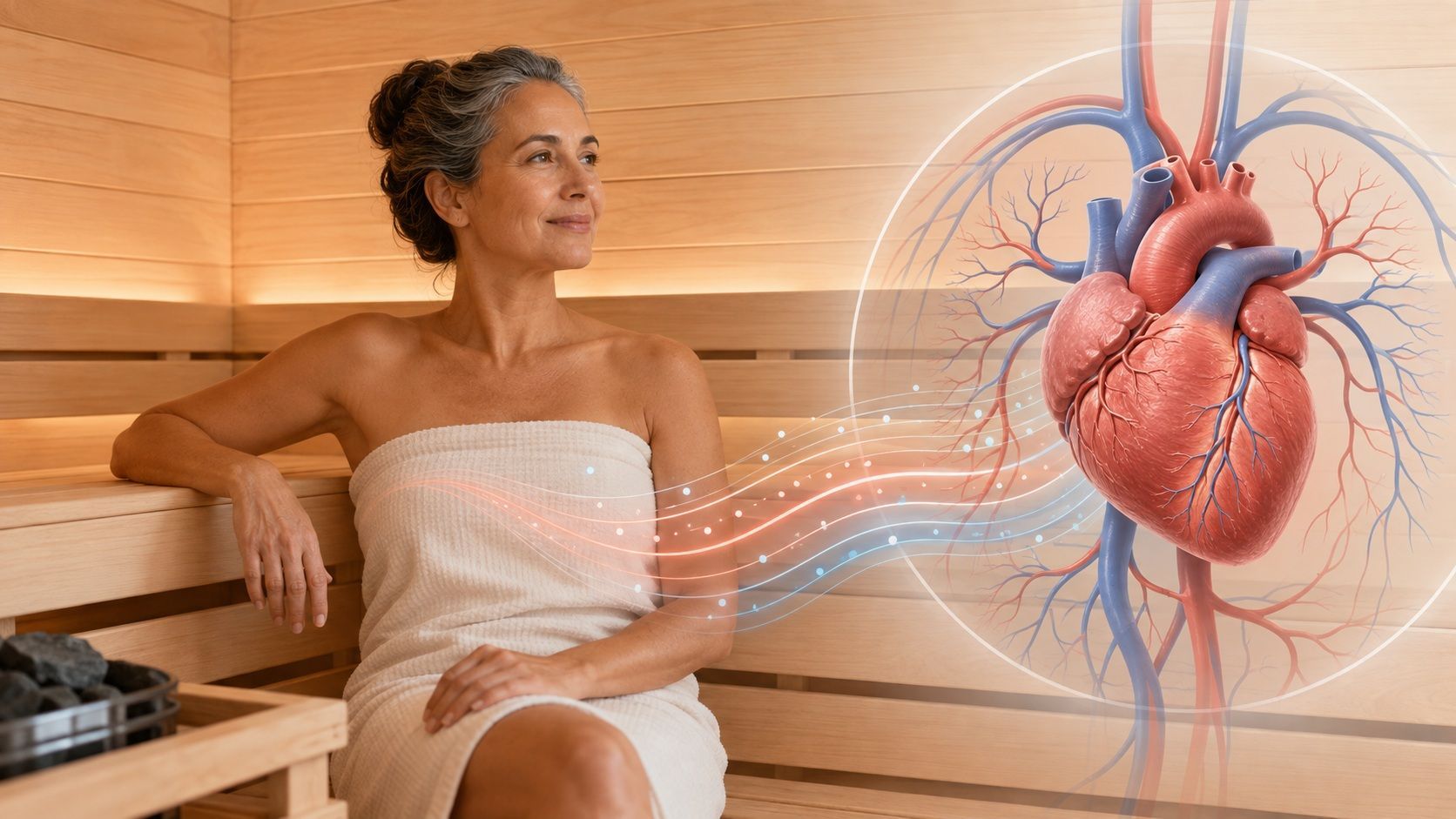
For many people, a sauna is simply a place to unwind. Yet the rise in heart rate, widening of blood vessels and increase in skin blood flow that occur in a hot room have led researchers to ask a more interesting question: could regular sauna bathing support cardiovascular health?
The short answer is that sauna bathing is promising, but it is not a treatment or a substitute for exercise, medication or medical review. Large Finnish studies have linked frequent traditional sauna use with lower rates of high blood pressure, stroke, fatal cardiovascular disease and sudden cardiac death. Smaller trials suggest that repeated heat exposure may improve blood pressure, cardiorespiratory fitness and some measures of vascular function. However, much of the most striking evidence is observational. People who use saunas regularly may differ from those who do not in ways that researchers cannot completely measure. [1-7]
This article explains what happens to your cardiovascular system in a sauna, what the research actually shows, where the uncertainties lie and how to use a sauna more safely. The emphasis is on traditional Finnish-style sauna bathing because that is where the strongest long-term evidence exists. Infrared saunas, steam rooms, hot tubs and hot-water immersion create different combinations of heat and humidity, so their effects should not automatically be assumed to be identical.
Quick answer: is sauna good for your heart?
Regular sauna bathing may support heart and blood-vessel health by temporarily increasing heart rate and circulation, widening blood vessels and, after a session, often lowering blood pressure. Frequent use has been associated with fewer fatal cardiovascular events and strokes in long-term Finnish cohorts. These findings do not prove that sauna itself prevents heart disease, and results from controlled trials are more modest. Sauna is best viewed as an optional addition to established heart-healthy habits, not as a replacement for physical activity or medical treatment. [1-7]
What happens to your cardiovascular system in a sauna?
When the air around you becomes very hot, your body must move heat from its core to the skin. Blood vessels near the skin dilate, skin blood flow rises and sweating begins. To maintain circulation while more blood is directed towards the skin, the heart pumps faster. In a typical sauna session, heart rate can rise into a range seen during light-to-moderate physical activity, although you are not producing the muscular work or gaining all the metabolic and musculoskeletal benefits of exercise. [2,5]
Blood pressure responses vary. Systolic pressure may stay similar, rise slightly or fall during heat exposure, while diastolic pressure commonly falls as peripheral blood vessels dilate. After leaving the sauna, blood pressure may remain lower for a period. Fluid loss through sweating reduces plasma volume, which is why dehydration can turn a normally tolerable session into dizziness, fainting or excessive strain. [2,5]
Repeated heat exposure may also stimulate adaptations involving endothelial function, arterial stiffness, autonomic balance and heat-shock proteins. The endothelium is the inner lining of blood vessels and helps regulate vascular tone. These mechanisms are biologically plausible, but a plausible mechanism is not the same as proof that sauna prevents heart attacks or extends life. [2,11,17]
Potential cardiovascular benefits of sauna bathing
1. Blood pressure may improve
High blood pressure is one of the most important modifiable risk factors for heart attack, stroke, heart failure and kidney disease. A single sauna session can produce an immediate reduction in blood pressure for some people. In one study of 100 adults, a 30-minute sauna session reduced average systolic blood pressure from 137 to 130 mmHg and diastolic pressure from 82 to 75 mmHg immediately afterwards; arterial stiffness also decreased. This was an acute physiological study, so it does not establish a lasting treatment effect. [3,5,6]
Long-term observational data are encouraging. In a prospective cohort of 1,621 Finnish men without hypertension at baseline, those reporting four to seven sauna sessions each week had a lower risk of developing hypertension than those using a sauna once weekly. Frequency may be a marker of other behaviours, and the population was relatively homogeneous, so the findings cannot be applied uncritically to everyone. [3]
A 2022 randomised trial provides a more controlled piece of evidence. Adults with cardiovascular risk factors completed exercise alone or exercise followed by a 15-minute sauna, three times weekly for eight weeks. The exercise-plus-sauna group achieved greater improvements in cardiorespiratory fitness and systolic blood pressure than exercise alone. The study supports sauna as an adjunct to exercise, but it was short and does not tell us whether clinical events were prevented. [6]
2. Circulation and endothelial function may benefit
Heat causes vasodilation and greatly increases skin blood flow. Repeated exposure may train blood vessels to respond more effectively to changes in demand. Experimental passive-heat studies have reported improvements in endothelial function and arterial stiffness, both relevant to cardiovascular risk. A 2016 controlled study using repeated hot-water therapy, rather than sauna, improved flow-mediated dilation and arterial stiffness in sedentary adults. It supports the wider concept of heat therapy, but it should not be presented as direct evidence for every sauna format. [2,5,11]
Research on Finnish sauna has also shown favourable acute changes in arterial stiffness. In adults with established coronary artery disease, however, an eight-week study of unsupervised Finnish sauna bathing did not demonstrate broad improvements across all vascular outcomes. That mixed result matters: the physiology is credible, but benefits are not uniform across populations, protocols or measurements. [5,12]
3. Frequent sauna use is associated with fewer fatal cardiovascular events
The best-known evidence comes from the Kuopio Ischaemic Heart Disease Risk Factor Study. Researchers followed 2,315 middle-aged Finnish men for about two decades. Compared with one sauna session per week, two to three sessions and four to seven sessions were associated with progressively lower risks of sudden cardiac death, fatal coronary heart disease, fatal cardiovascular disease and death from any cause. Longer sessions were also associated with lower risk. [1]
The size and duration of this study make it important, but it remains observational. Sauna habits were assessed at baseline, the participants were men from eastern Finland and residual confounding is possible. The study shows an association, not that prescribing four to seven sauna sessions will necessarily produce the same risk reduction in a different population. [1,2]
A separate prospective analysis including men and women also found that more frequent sauna bathing was associated with lower cardiovascular mortality and improved risk prediction. This provides some support beyond the original male cohort, but much of the epidemiology still comes from Finnish populations accustomed to traditional sauna use. [7]
4. Stroke risk may be lower among frequent users
A prospective study of 1,628 Finnish adults found an inverse relationship between sauna frequency and stroke over roughly 15 years. People using a sauna four to seven times per week experienced fewer strokes than those using it once weekly, after adjustment for several cardiovascular risk factors. As with the mortality studies, this does not prove causality. It is nevertheless consistent with possible effects on blood pressure, vascular function and autonomic regulation. [4]
5. Sauna may complement cardiorespiratory fitness
Fitness remains one of the strongest protective factors for cardiovascular health. Cohort analyses suggest that high cardiorespiratory fitness and frequent sauna bathing together are associated with the lowest risks of fatal cardiovascular and all-cause outcomes. Another analysis reported a similar interaction for sudden cardiac death. These findings are best interpreted as support for complementary habits, not permission to exchange a run, brisk walk or cycle for sitting in a hot room. [9,10]
The randomised exercise-plus-sauna trial is useful here: adding a short sauna after supervised exercise improved fitness more than exercise alone over eight weeks. Possible explanations include added plasma-volume and vascular adaptations. Even so, sauna does not provide the strength, balance, bone, glucose-control and functional benefits created by physical activity. [6]
6. Inflammation and autonomic balance are possible pathways
Chronic low-grade inflammation is involved in atherosclerosis. In a long-term Finnish analysis, greater sauna frequency was associated with lower levels of C-reactive protein and other inflammatory markers. This association may help explain cardiovascular findings, but it does not establish that sauna directly suppresses inflammation or should be used to treat an inflammatory condition. [8]
Sauna bathing also changes autonomic nervous-system activity. During heat exposure, heart rate rises; during recovery, parasympathetic activity may increase. Relaxation, better sleep and reduced perceived stress could indirectly support heart health. These outcomes are valuable, but they are difficult to separate from the social and restorative context in which many people take a sauna. [2,17]
What the research does not prove
The headline risk reductions often quoted online come mainly from observational cohorts, not randomised trials designed to measure heart attacks, strokes or death. Observational studies can adjust for smoking, fitness, cholesterol, diabetes and socioeconomic factors, but they cannot remove every difference between frequent sauna users and other participants. [1,3,4,7]
Traditional Finnish sauna research also cannot automatically be transferred to infrared cabins, steam rooms or extreme heat-and-cold routines. Temperatures, humidity, session lengths and the way heat reaches the body differ. Clinical trials are generally small, short and use intermediate outcomes such as blood pressure or arterial stiffness. A systematic review of sauna therapy in heart failure found possible short-term improvements but concluded that better evidence was needed for long-term outcomes. [12,13]
The appropriate conclusion is therefore measured: sauna bathing produces real cardiovascular responses and may offer benefits when used regularly and safely, but it should remain an adjunct to proven prevention. Do not stop antihypertensive, cholesterol-lowering or heart medication because you have started sauna sessions.
Sauna and heart disease: who should seek medical advice?
Many people with stable, well-managed cardiovascular disease can tolerate sauna bathing, and reviews have described it as generally safe in stable coronary disease. Individual risk varies, however. Speak to your GP or cardiology team before starting if you have known heart disease, symptoms during exertion, very high or low blood pressure, recurrent fainting, significant valve disease, an arrhythmia, heart failure, kidney disease or medicines that affect blood pressure, fluid balance or sweating. [14,15]
Avoid sauna if you have unstable angina, a recent heart attack, decompensated heart failure, severe symptomatic aortic stenosis, acute illness or fever, or uncontrolled blood pressure unless a clinician who knows your condition has advised otherwise. Stop immediately and seek medical help if heat exposure causes chest pain, severe breathlessness, fainting, a sustained racing or irregular heartbeat, confusion or neurological symptoms.
Alcohol is a particularly poor combination with sauna. It increases dehydration, impairs judgement and may worsen blood-pressure instability. Rapid immersion in very cold water after intense heat produces abrupt changes in vascular tone and heart workload. People with cardiovascular disease should not assume that cold plunges are safe simply because they are popular. [14,15]
How to use a sauna more safely
If you are new to sauna bathing and medically well, begin conservatively. A practical approach is five to ten minutes at a comfortable temperature, then leave, cool gradually and assess how you feel. Over subsequent sessions, you may build towards approximately 10 to 20 minutes if well tolerated. There is no need to chase the highest temperature or longest duration; discomfort is a reason to leave, not a training target.
Drink water before and after the session, especially after exercise. Avoid entering when dehydrated, unwell or after alcohol. Stand up slowly because blood pressure may drop during recovery. Do not sauna alone if you have previously felt faint. Follow the facility’s hygiene and safety instructions, and never lock the door.
For people combining exercise and sauna, cool down briefly first and replace fluids. Sauna can add heat stress to an already demanding workout. Anyone taking diuretics, vasodilators or several blood-pressure medicines should ask a clinician or pharmacist whether additional precautions are needed.
Traditional versus infrared sauna
A traditional Finnish sauna heats the surrounding air, commonly to approximately 70-100°C with relatively low humidity, although water may be placed on hot stones for brief increases in humidity. Infrared cabins operate at lower air temperatures and heat the body more directly. Both can increase heart rate and skin blood flow, but they are not interchangeable research interventions. [2,14,15]
Most long-term evidence linking sauna frequency with fewer cardiovascular events concerns Finnish-style sauna.
How often should you use a sauna for heart health?
There is no universally established clinical prescription. Observational studies often report the strongest associations among people taking four to seven Finnish sauna sessions per week, but this is not proof that everyone should adopt that schedule. Controlled trials have used protocols such as 15 minutes after exercise three times weekly. The best frequency is one that is safe, enjoyable, sustainable and compatible with your health status. [1,6,18]
For a beginner, one or two short sessions each week may be more sensible than immediately copying a Finnish cohort. Build gradually, keep each exposure comfortable and review the plan with a clinician if you have cardiovascular disease or relevant medication. Consistency may matter more than extremes.
Where sauna fits in a heart-healthy lifestyle
It is easy for an appealing wellness practice to receive more attention than the less glamorous measures that have a much stronger evidence base. Sauna should sit around the edges of cardiovascular prevention, not at its centre. The foundations remain avoiding tobacco, taking regular aerobic and strengthening exercise, eating a balanced diet rich in vegetables, fruit, pulses, whole grains and unsaturated fats, sleeping adequately, moderating alcohol and maintaining healthy blood pressure, cholesterol and glucose levels.
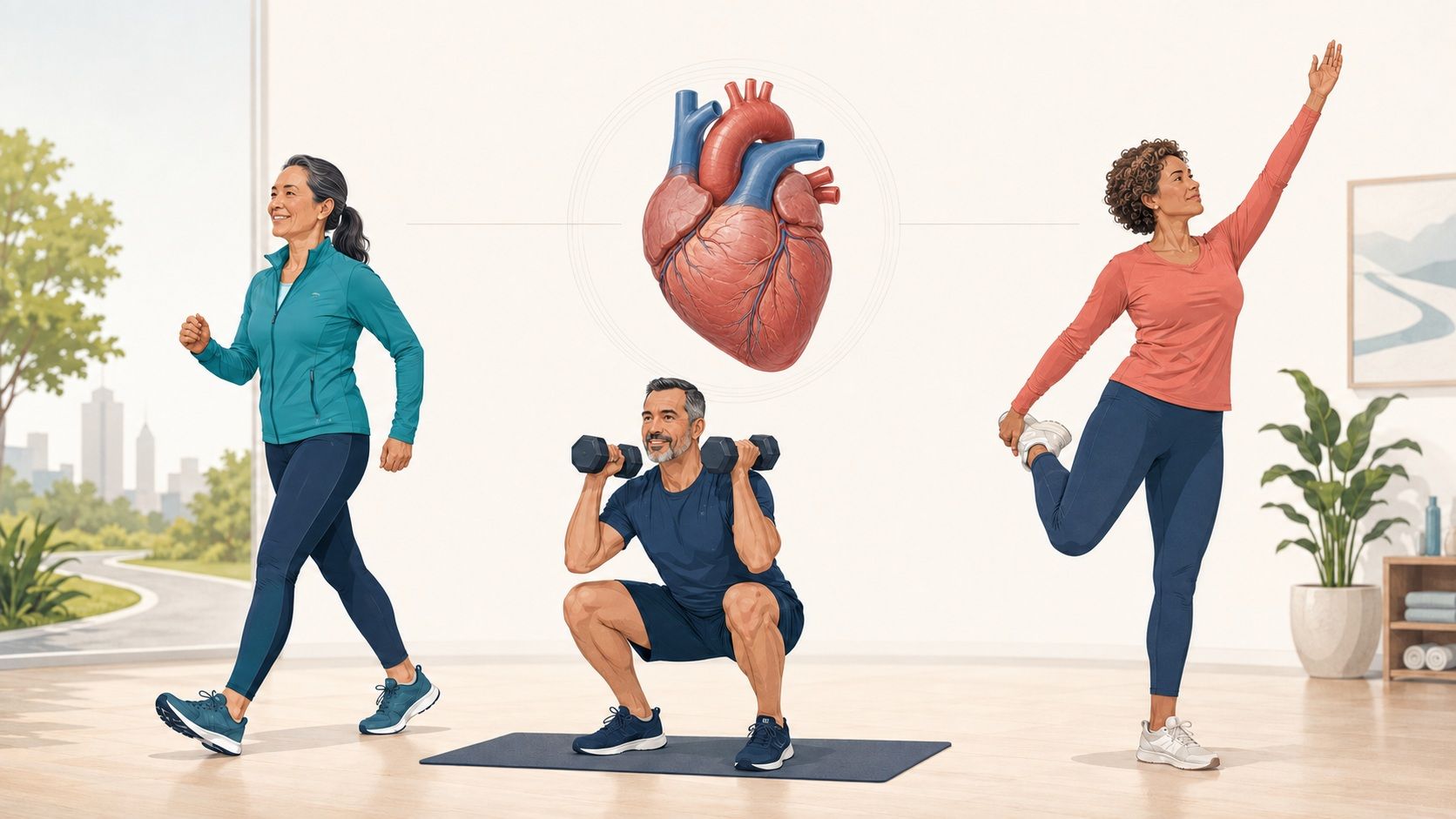
Exercise deserves particular emphasis. Both exercise and sauna increase heart rate, skin blood flow and sweating, but the overlap is incomplete. A brisk walk, cycle or swim requires skeletal muscles to perform work and improves their ability to extract oxygen. Regular activity also supports insulin sensitivity, body composition, bone strength, balance and independence. Sauna cannot deliver those adaptations. The most favourable research signals often appear when heat exposure accompanies good fitness rather than replacing it. [6,9,10]
The same principle applies to treatment. If a clinician has recommended a statin, antihypertensive medicine, anticoagulant or another cardiovascular therapy, sauna is not an alternative. A lower blood-pressure reading immediately after heat exposure does not mean underlying hypertension has resolved. Measurements made when hot, dehydrated or just out of the sauna may not represent usual resting pressure. Monitor blood pressure according to your clinician’s instructions, normally when seated, rested and at a comfortable room temperature.
Where sauna may add value is adherence and enjoyment. A relaxing ritual after appropriate exercise may encourage some people to attend the gym consistently, make time for recovery or manage stress. Those indirect benefits are worthwhile even if future trials find that sauna has only modest independent cardiovascular effects. A health practice does not need to be miraculous to be useful; it needs to be safe, sustainable and placed in proper context.
How to judge sauna health claims online
Sauna content online often turns an association into a promise. When you see a striking percentage reduction in heart disease or death, ask whether the source was a randomised trial or an observational study. In the Finnish cohorts, participants chose their usual sauna habits; researchers did not randomly assign thousands of people to different frequencies for decades. The results can identify patterns but cannot fully prove cause and effect. [1,3,4,7]
Next, check the population and the intervention. Findings in middle-aged Finnish men accustomed to dry sauna may not apply equally to older adults in in the UK, people with multiple medical conditions, pregnant women or first-time infrared-cabin users. A study of supervised far-infrared therapy in heart failure is not evidence that an unsupervised spa session treats heart failure. Likewise, research on hot-water immersion informs heat physiology but is not a trial of sauna bathing.
Look at the outcome. Changes in heart rate, sweating or blood flow show that the body is responding; they do not demonstrate fewer heart attacks. Blood pressure and arterial stiffness are clinically relevant intermediate measures, but long-term clinical events matter most.
A practical first-session checklist
Before entering, make sure you feel well, have had water and have not consumed alcohol. Tell someone if you are new to sauna use. Remove jewellery that may become hot, sit on a towel and choose a lower bench if the heat feels intense. Set a short timer rather than relying on willpower or comparison with other users.
During the session, breathe normally and pay attention to warning symptoms. Leave promptly for light-headedness, nausea, headache, palpitations, chest discomfort or unusual breathlessness. Cool gradually afterwards, sit if necessary and drink water. Avoid driving or exercising again until dizziness has completely resolved. A well-tolerated session should leave you relaxed, not depleted.
Frequently asked questions
Can sauna lower blood pressure?
Blood pressure often falls after a sauna session, and regular sauna use has been associated with a lower risk of developing hypertension. A short randomised trial found additional blood-pressure improvement when sauna followed exercise. Sauna is not a replacement for prescribed treatment, and people prone to low blood pressure may become dizzy or faint. [3,5,6]
Does sauna count as cardio?
No. Sauna increases heart rate and circulation, so parts of the cardiovascular response resemble light-to-moderate activity. It does not involve active muscle contraction and cannot reproduce the full benefits of aerobic and resistance exercise. Think of it as optional heat exposure, not a workout replacement. [2,5,16]
Can sauna prevent a heart attack or stroke?
Frequent sauna use is associated with fewer fatal cardiovascular events and strokes in Finnish cohort studies, but association is not proof of prevention. No sauna routine should replace not smoking, regular physical activity, a balanced diet, sleep, weight management, blood-pressure control or evidence-based medication. [1,4,7]
Is sauna safe if I have high blood pressure?
It may be safe when blood pressure is stable and well managed, but heat can cause meaningful changes in circulation. If your blood pressure is uncontrolled, you experience symptoms or you take several medicines that affect pressure or fluid balance, obtain personalised advice first. [14,15]
Is an infrared sauna better for the heart?
There is not enough high-quality evidence to say that infrared sauna is superior. The strongest long-term outcome data relate to traditional Finnish sauna bathing. Infrared protocols may have particular effects, but claims should be matched to the exact technology and population studied.
Summary
Sauna bathing is more than relaxation: it produces substantial but temporary changes in heart rate, blood flow and vascular tone. Regular use may support blood-pressure control, vascular function and cardiorespiratory adaptation. Frequent traditional sauna bathing is also associated with lower rates of stroke and fatal cardiovascular disease in long-term Finnish studies. [2,5,6,11]
The evidence is encouraging rather than definitive. The strongest outcome studies are observational, controlled trials are comparatively small and sauna types differ. Used sensibly, sauna can be an enjoyable addition to a heart-healthy lifestyle. It should never displace exercise, medical assessment or proven treatment. If you have cardiovascular disease, significant symptoms or uncertainty about your medicines, seek individual advice before turning up the heat. [1-7,12,13]
References
- Laukkanen T, Khan H, Zaccardi F, Laukkanen JA. Association Between Sauna Bathing and Fatal Cardiovascular and All-Cause Mortality Events. JAMA Internal Medicine. 2015;175(4):542-548. doi:10.1001/jamainternmed.2014.8187. PMID: 25705824.
- Laukkanen JA, Laukkanen T, Kunutsor SK. Cardiovascular and Other Health Benefits of Sauna Bathing: A Review of the Evidence. Mayo Clinic Proceedings. 2018;93(8):1111-1121. doi:10.1016/j.mayocp.2018.04.008. PMID: 30077204.
- Zaccardi F, Laukkanen T, Willeit P, et al. Sauna Bathing and Incident Hypertension: A Prospective Cohort Study. American Journal of Hypertension. 2017;30(11):1120-1125. doi:10.1093/ajh/hpx102. PMID: 28633297.
- Kunutsor SK, Khan H, Zaccardi F, et al. Sauna Bathing Reduces the Risk of Stroke in Finnish Men and Women: A Prospective Cohort Study. Neurology. 2018;90(22):e1937-e1944. doi:10.1212/WNL.0000000000005606. PMID: 29720543.
- Laukkanen T, Kunutsor SK, Zaccardi F, et al. Acute effects of sauna bathing on cardiovascular function. Journal of Human Hypertension. 2018;32:129-138. doi:10.1038/s41371-017-0008-z.
- Lee E, Laukkanen T, Kunutsor SK, et al. Effects of regular sauna bathing in conjunction with exercise on cardiovascular function: a multi-arm, randomized controlled trial. American Journal of Physiology-Regulatory, Integrative and Comparative Physiology. 2022;323(3):R289-R299. doi:10.1152/ajpregu.00076.2022. PMID: 35785965.
- Laukkanen T, Kunutsor SK, Khan H, et al. Sauna bathing is associated with reduced cardiovascular mortality and improves risk prediction in men and women: a prospective cohort study. BMC Medicine. 2018;16:219. doi:10.1186/s12916-018-1198-0. PMID: 30486813.
- Kunutsor SK, Laukkanen T, Laukkanen JA. Longitudinal associations of sauna bathing with inflammation and oxidative stress: the KIHD prospective cohort study. Annals of Medicine. 2018;50(5):437-442. doi:10.1080/07853890.2018.1489143. PMID: 29897261.
- Kunutsor SK, Khan H, Laukkanen T, Laukkanen JA. Joint associations of sauna bathing and cardiorespiratory fitness on cardiovascular and all-cause mortality risk. Annals of Medicine. 2018;50(2):139-146. doi:10.1080/07853890.2017.1387927. PMID: 28972808.
- Laukkanen JA, Kunutsor SK. Combined Effect of Sauna Bathing and Cardiorespiratory Fitness on the Risk of Sudden Cardiac Deaths in Caucasian Men. Progress in Cardiovascular Diseases. 2018;60(6):635-641. doi:10.1016/j.pcad.2018.03.005. PMID: 29551418.
- Brunt VE, Howard MJ, Francisco MA, Ely BR, Minson CT. Passive heat therapy improves endothelial function, arterial stiffness and blood pressure in sedentary humans. Journal of Physiology. 2016;594(18):5329-5342. doi:10.1113/JP272453. PMID: 27270841.
- Debray A, Nelson MD, van Dijk E, et al. Finnish sauna bathing and vascular health of adults with coronary artery disease. American Journal of Physiology-Regulatory, Integrative and Comparative Physiology. 2023. PMID: 37650138.
- Källström M, Soveri I, Oldgren J, Laukkanen J, Ichiki T, Tei C, Timmerman M. Effects of sauna bath on heart failure: A systematic review and meta-analysis. Clinical Cardiology. 2018;41(11):1491-1501. doi:10.1002/clc.23077. PMID: 30239008.
- Hannuksela ML, Ellahham S. Benefits and risks of sauna bathing. American Journal of Medicine. 2001;110(2):118-126. doi:10.1016/S0002-9343(00)00671-9. PMID: 11165553.
- Kukkonen-Harjula K, Kauppinen K. Health effects and risks of sauna bathing. International Journal of Circumpolar Health. 2006;65(3):195-205. PMID: 16871826.
- Hussain JN, Cohen MM. Infrared sauna as exercise-mimetic? Physiological responses to infrared sauna vs exercise in healthy women: a randomized controlled crossover trial. Complementary Therapies in Medicine. 2022;64:102801. PMID: 34954348.
- Laukkanen JA, Laukkanen T. Is sauna bathing protective of sudden cardiac death? A review of the evidence. Progress in Cardiovascular Diseases. 2019;62(3):288-293. PMID: 31102597.
- Kunutsor SK, Jae SY, Kurl S, Laukkanen JA. Sauna bathing and mortality risk: unraveling the interaction with systolic blood pressure in a cohort of Finnish men. Scandinavian Cardiovascular Journal. 2024;58(1):2302159. doi:10.1080/14017431.2024.2302159. PMID: 38410962.
Written with assistance of AI, checked by Dr Bart Olechowski for accuracy.